










<
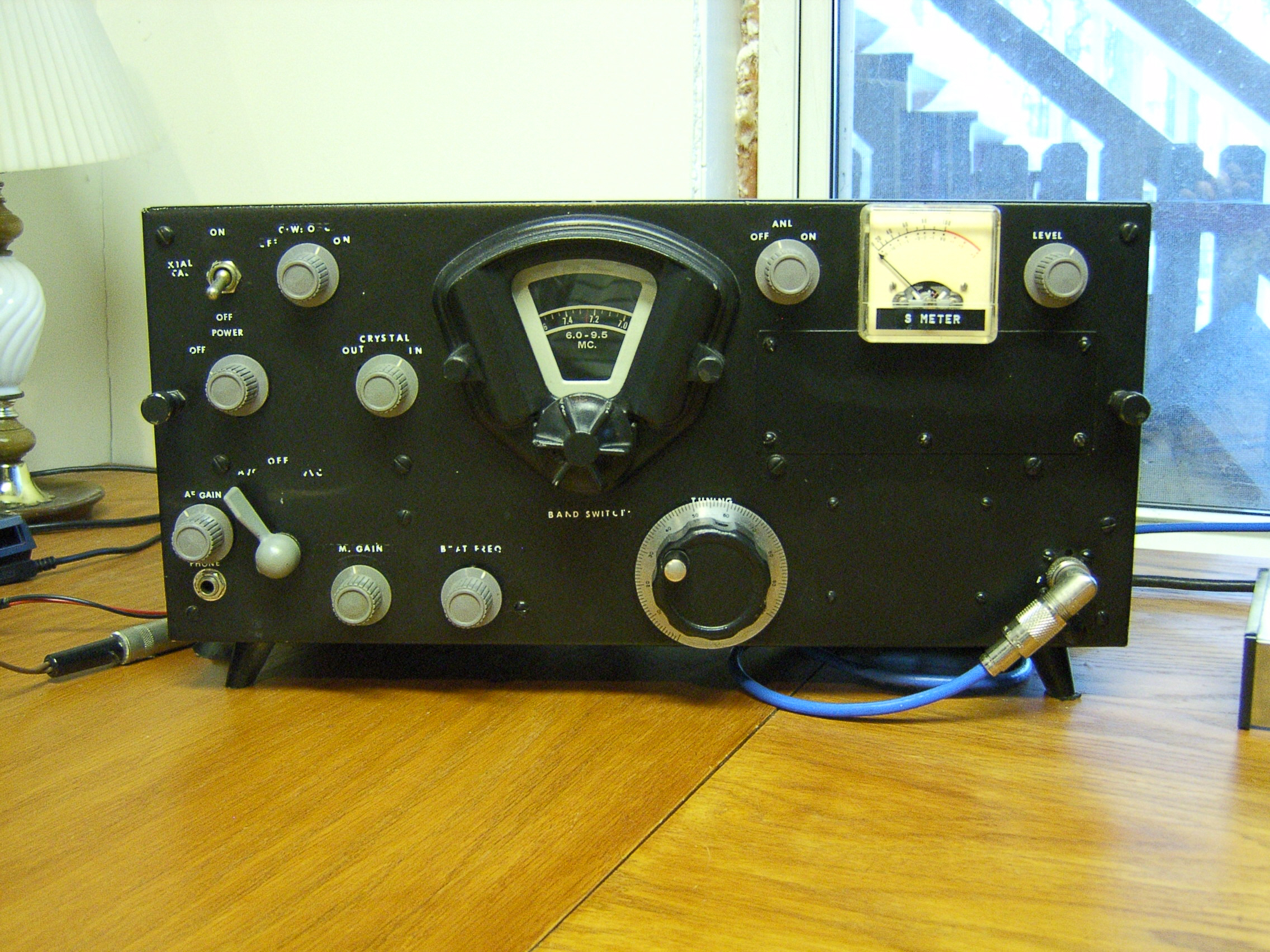
BC-348:
6 Band LW,SW Receiver. Coverage is continuous from 200khz to 500khz & 1.5mhz to 18mhz, only the AM broadcast band is missing. This WWII vintage receiver was from a B-17 bomber. This unit has been modified with a 110vac power supply, crystal calibrator, ANL, and Meter
All tubes are still original metal envelope tubes and all caps are oil filled. Unit is in perfect working order. This unit is as rugged as they come.
Made in U.S.A.
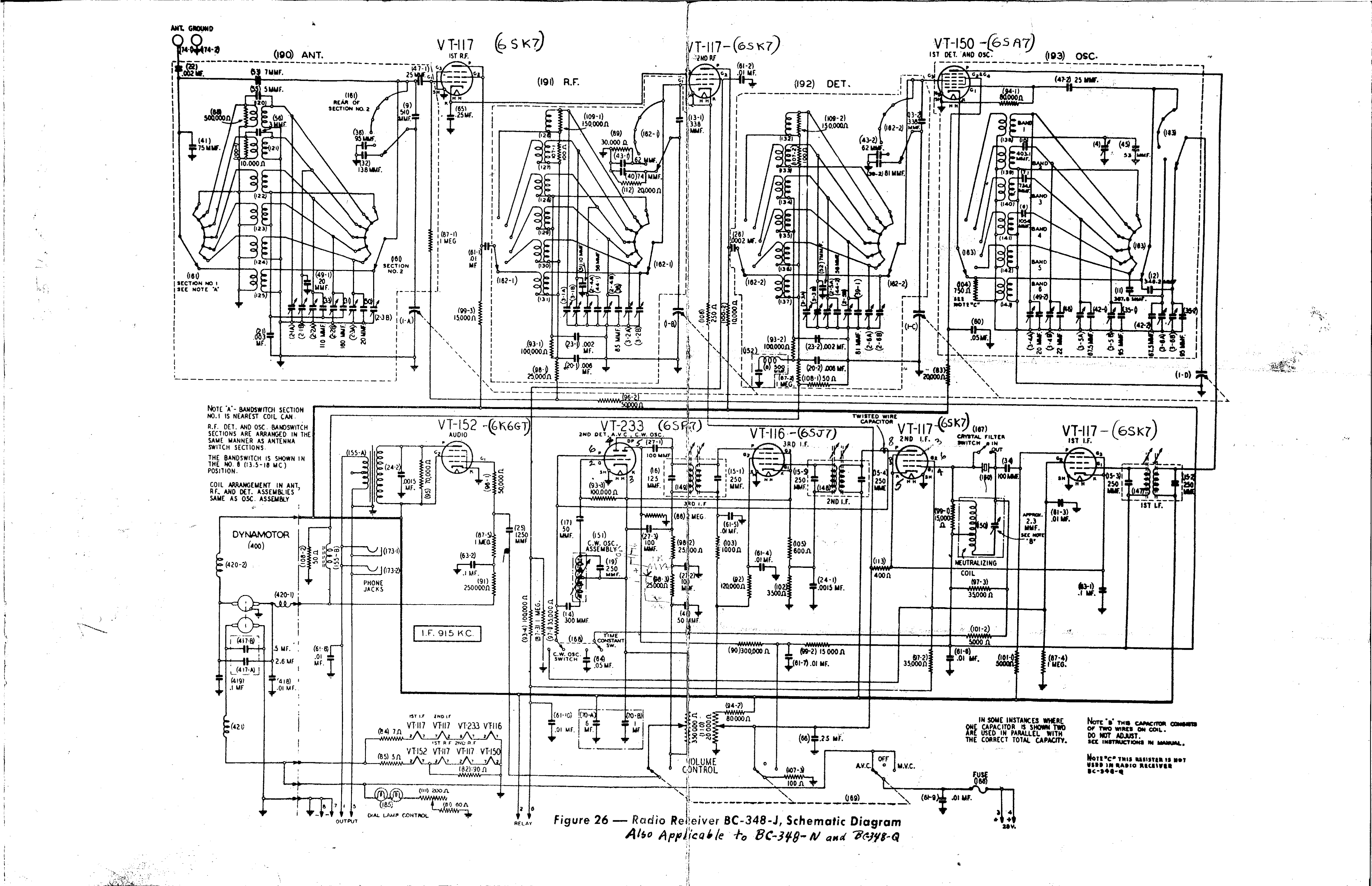
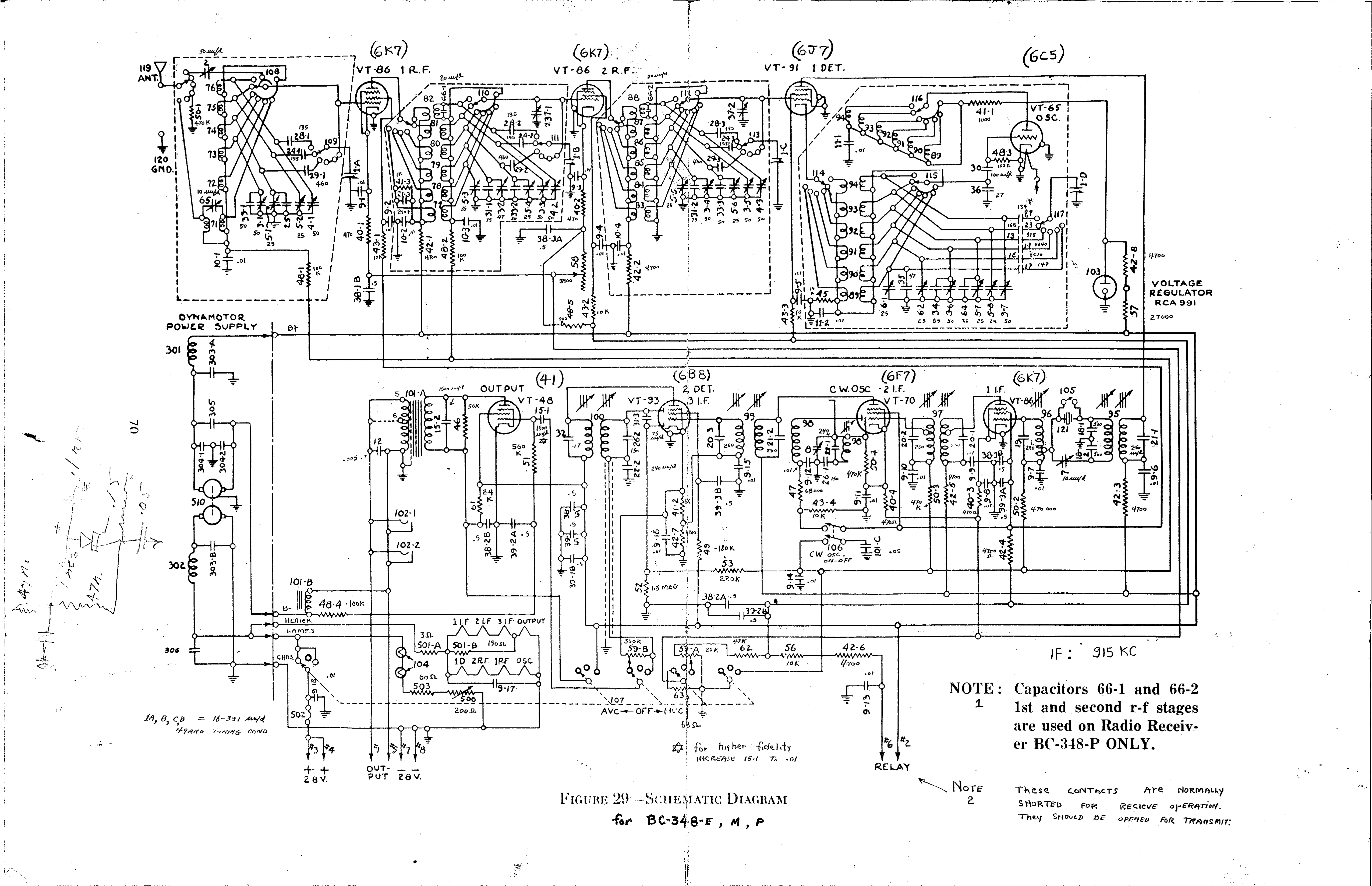
Schematics: (left click to enlarge, then right click to save)
Appearance inside a B-17 bomber: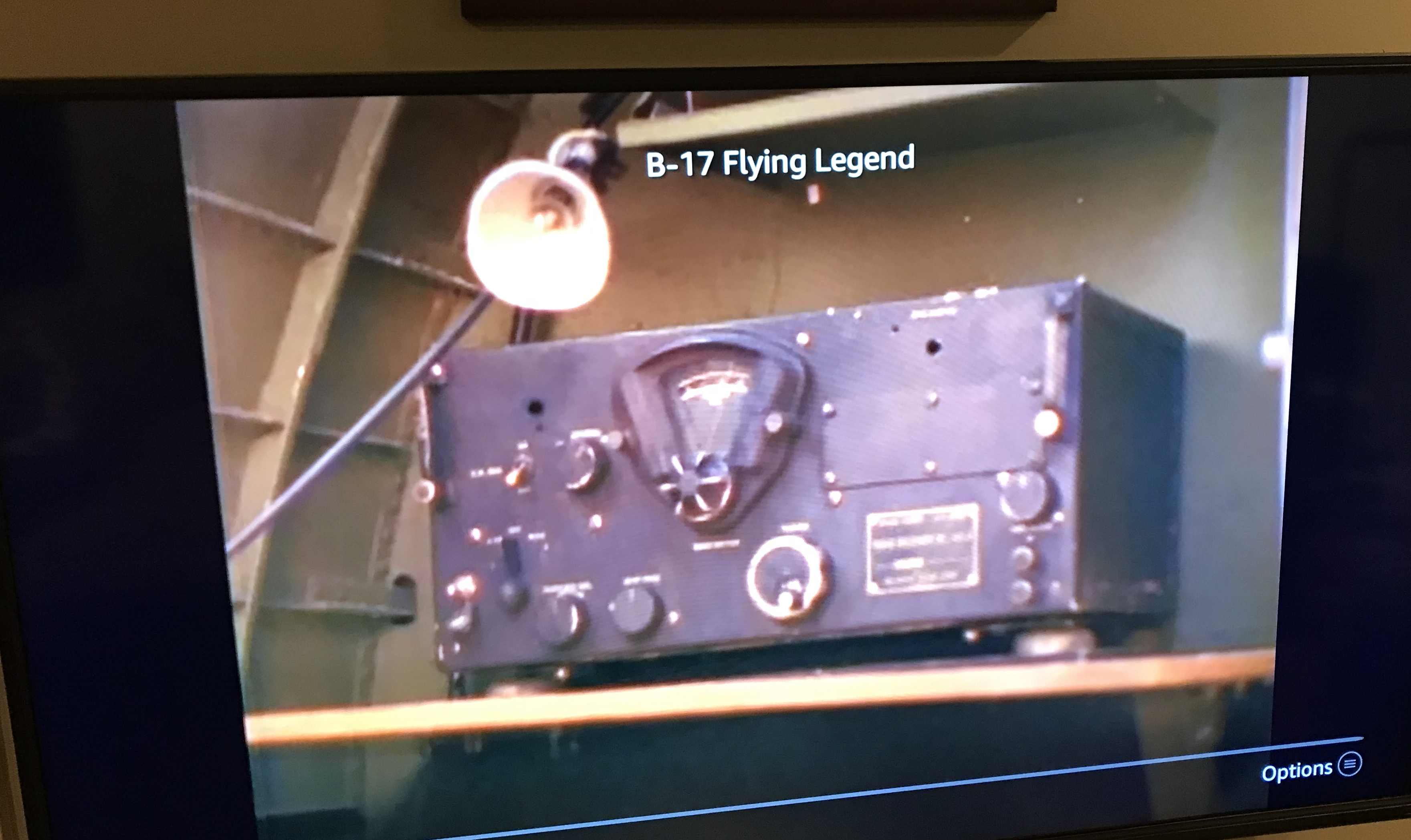
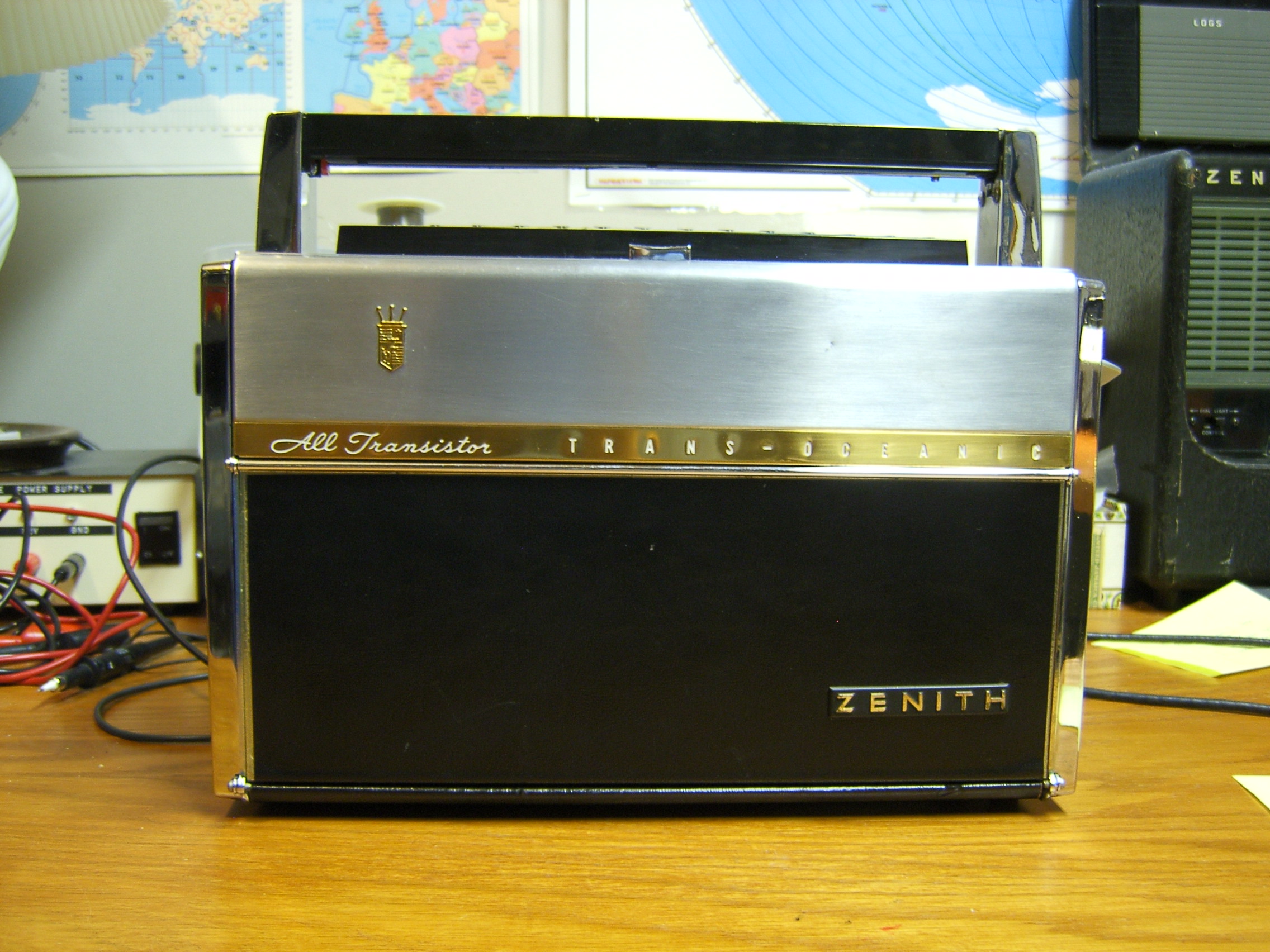 Zenith TransOceanic (Transistor)
 Classic 1961 Royal 1000D:
9 Band LW,MW,SW Receiver. Coverage is almost continuous from 150khz to 22mhz. (the D added the LW band) The LW,MW antenna is a "Wavemagnet" mounted on top of the Radio. An external "Wavemagnet" was provided to improve reception. SW antenna is a telescopic whip concealed inside the carrying handle. The handle unlatches from the left side, tips into a vertical position where the whip can be extended. Case and chassis are all metal construction which provides great shielding and stability, the negative side being great weight (13 lbs). Made in U.S.A (Chicago, IL)
Note: The 1000 model first appeared in 1957, and was one of the first transistor radios.
This unit is fully functional with none of its original parts replaced
Missing its external wavemagnet and earphone, and cover to battery case
The dial is still fairly accurate, showing WWV spot on
Performace is superior to any other portable AM shortwave unit.
Performance is simply amazing when you fold away the whip and attach an external antenna.
Zenith TransOceanic 1000D Manual (4k hi-res very large file size)
Click on the picture to download the PDF manual.
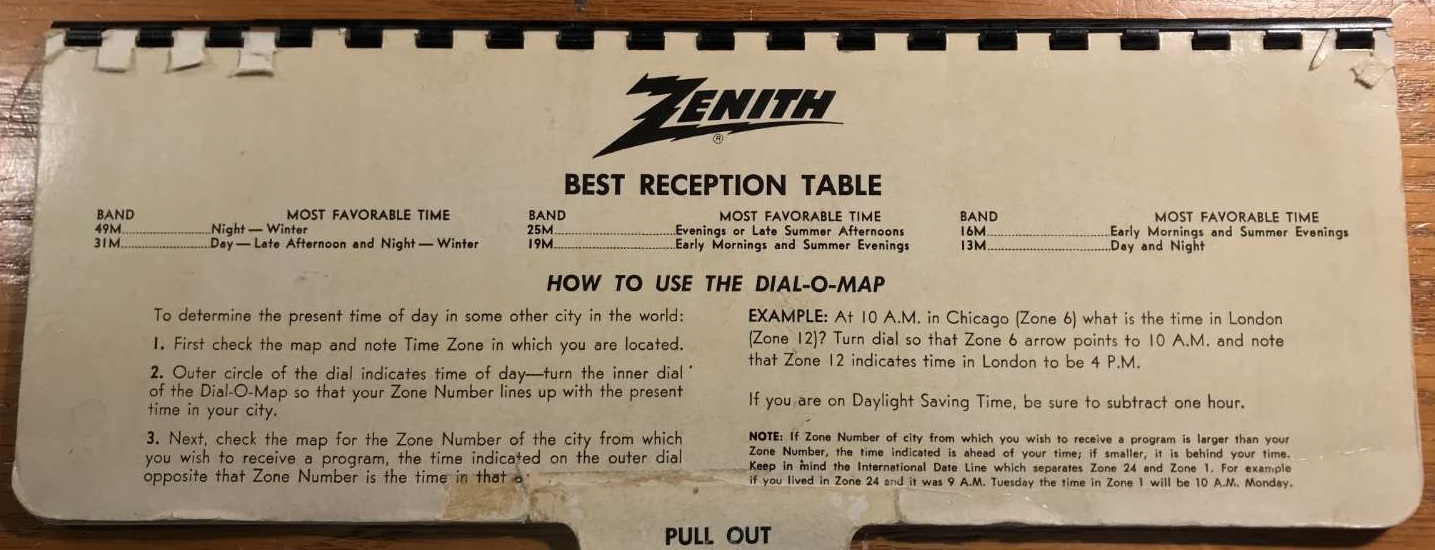
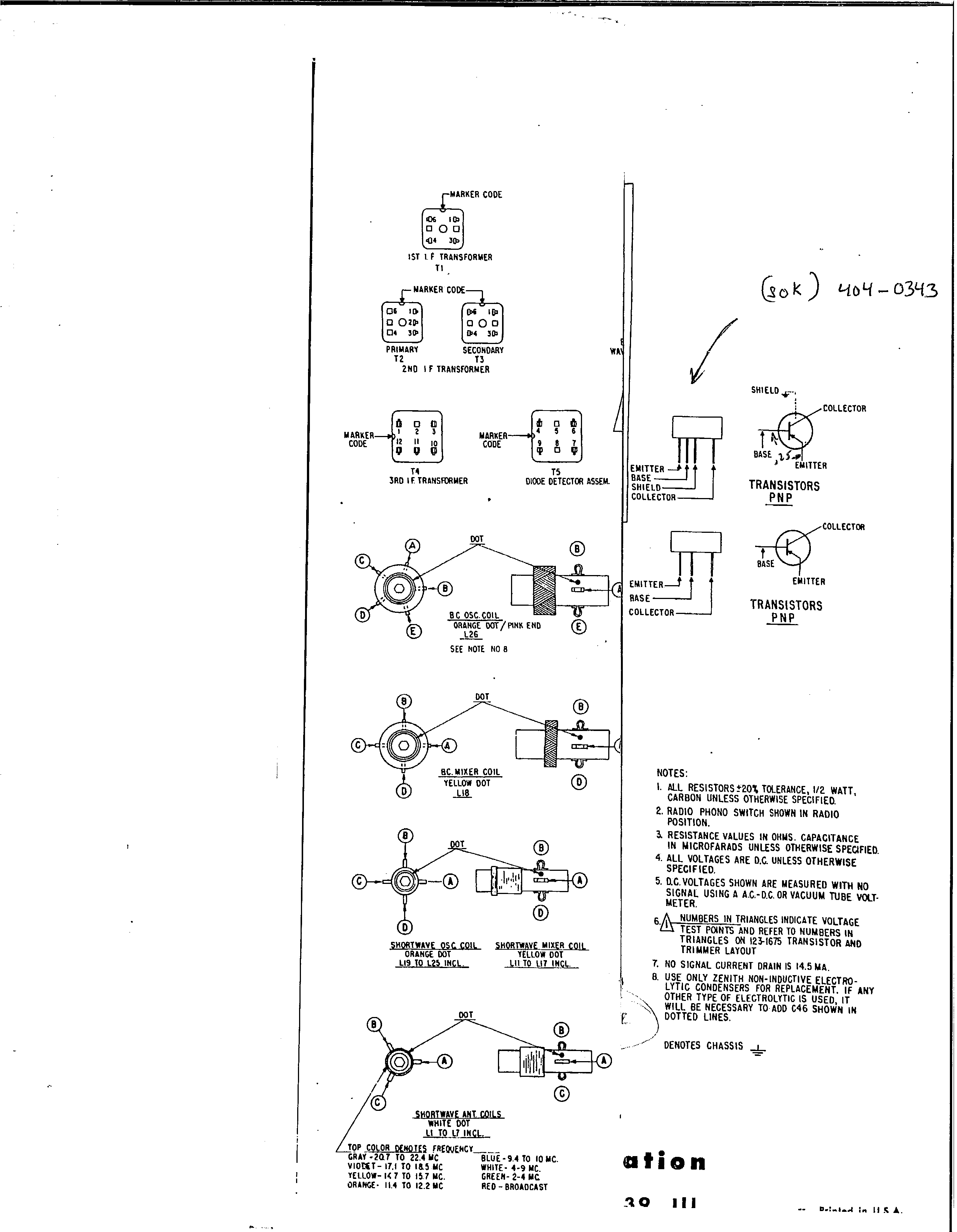
Zenith TransOceanic 1000D Schematics:
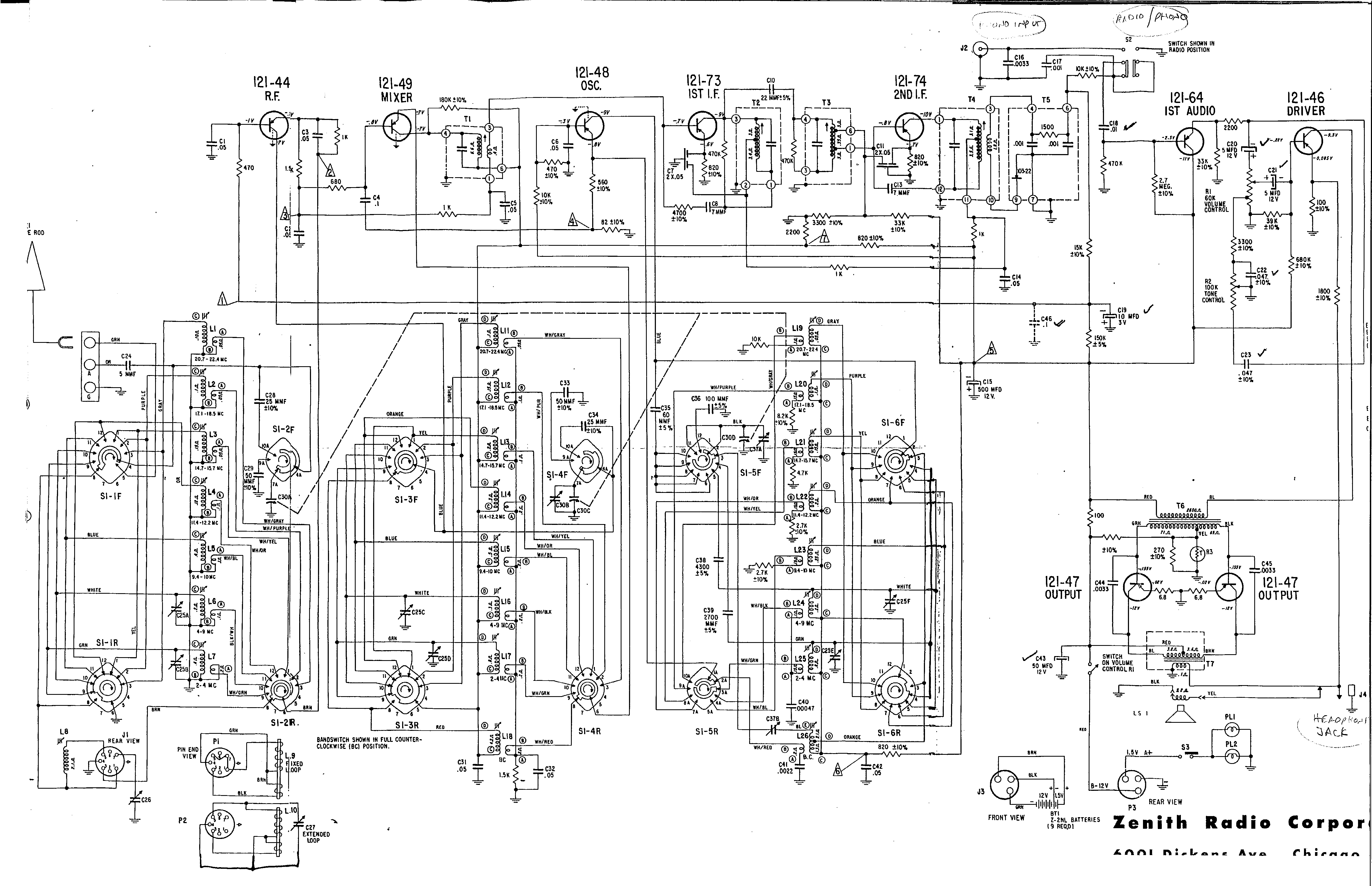
Zenith BFO option: (do not have a schematic for the S-53472 BFO itself)

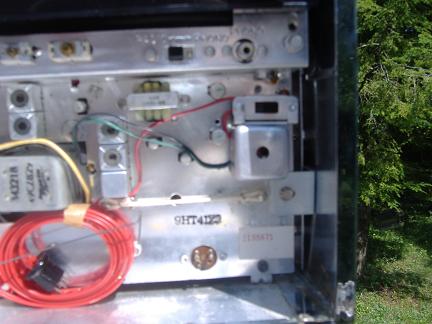
S-53472_R1000D_BFO_Instructions
See this webpage http://www.jproc.ca/hyperbolic/consol.html for details on navigation using CONSOL or CONSOLAN (as mentioned in the BFO instllation sheet)
Adding your own BFO:
Apply an approximately 0.5Vp-p 6200pf capacitively coupled "stable" ~452khz sinewave (for LSB and CW) to the 2nd IF Transistor Emitter (of the 3 legs, the Emitter leg is closest to the bottom of the radio). USB decode should be aproximately ~458khz
Solder a wire directly to the leg of the transistor and plug the transistor back into its socket. This give easy access to directly inject your sinewave signal.
Since this radio was only designed for AM, you will want to let the radio stabilize for best SSB/CW results.


(Left) G5RV antenna connection and the BFO connection to the 2nd IF transistor
(Center) Closer look of the 2nd IF transistor with the coax connection to the Emitter pin and Ground on the transformer case
(Right) Closeup of the 2nd IF transistor Emitter lead, bottom pin, with center of coax soldered.
Zenith TransOceanic "Royal 1000D" service manual (found on the BAMA website thanks to KB0MHM):
Zenith_Royal_1000D_Service_Manual
 Open front view of the Royal 1000D:
Bands are selected using a rotating drum mechanism designed to select and display one band at a time. (This system was copied by many manufacturers). The drum has an internal backlight for night viewing and operates from a single D cell. I have removed the spring return on the Light Switch. I leave it on when operating the unit.
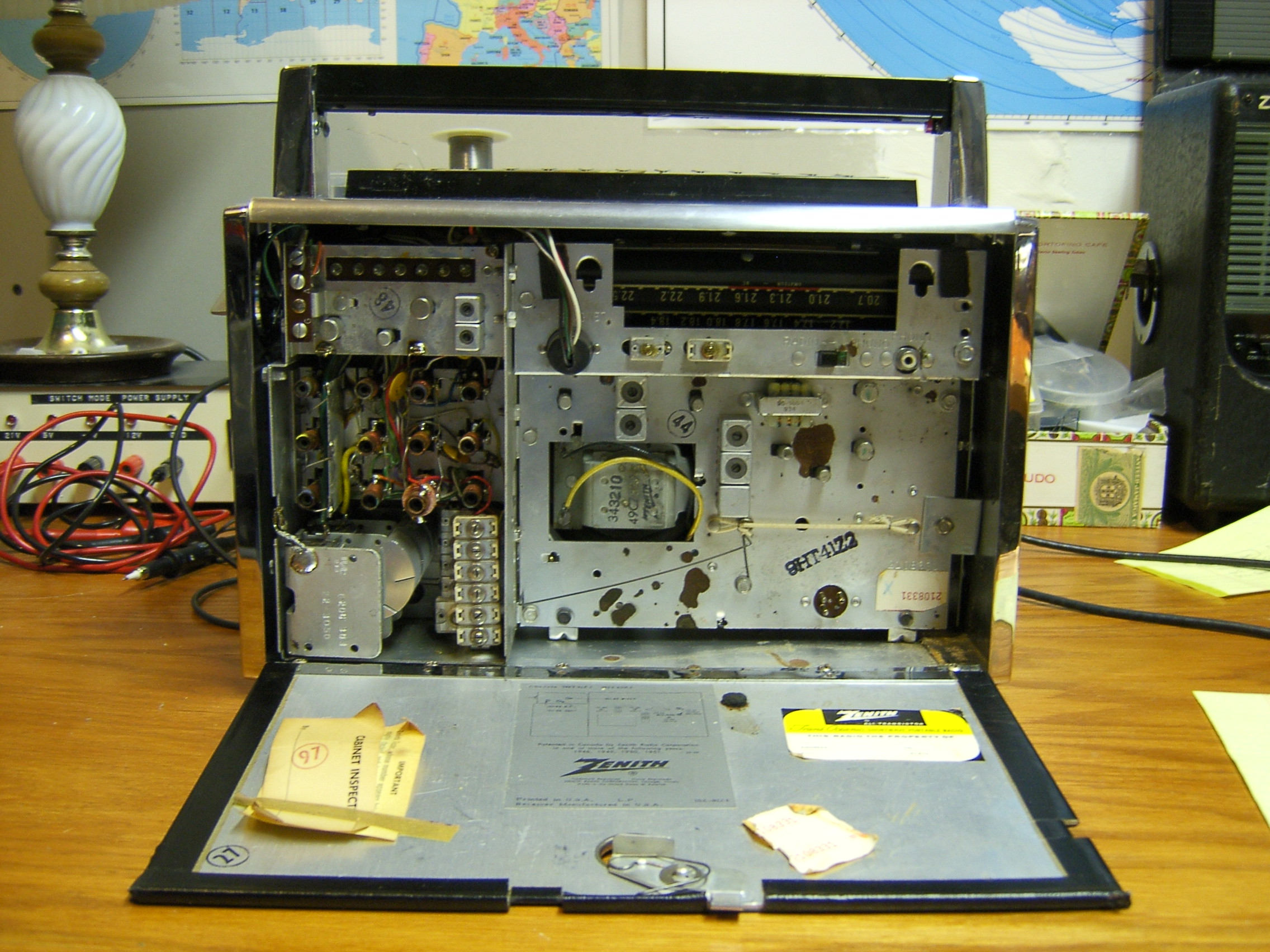 Inside view of the Royal 1000D.
9 germanium BJT PnP transistors all in sockets. Gear reduction 3 gang air-tunning capacitor and multistage IF tuning for all bands. The battery pack (not shown) fits in the lower right side and contains 9 D cells (1 for the backlight). Original Dry-Cell batteries were rated at 300hours of operation. New Alkaline batteries should last X2 or X3 times that long. This radio does not have provision for AC operation (there really is no need when the batteries will last years).
Transistors: Germanium PnP type
RF= 121-44, OSC= 121-48, MIXER=121-49, 1stIF=121-180,2ndIF=121-181, 1stAudio=121-64, Driver=121-46, Amp=(2) 121-47
121-44 = NTE126, 121-48 = NTE160, 121-49 = NTE160, 121-180 = NTE160, 121-181 = NTE160, 121-64 = NTE102A, 121-46=NTE102A, 121-47 = NTE102A
The very first transistor radio sold was in 1954, and the first Royal 1000 was sold in 1957. This unit (from its serial# is from 1961)
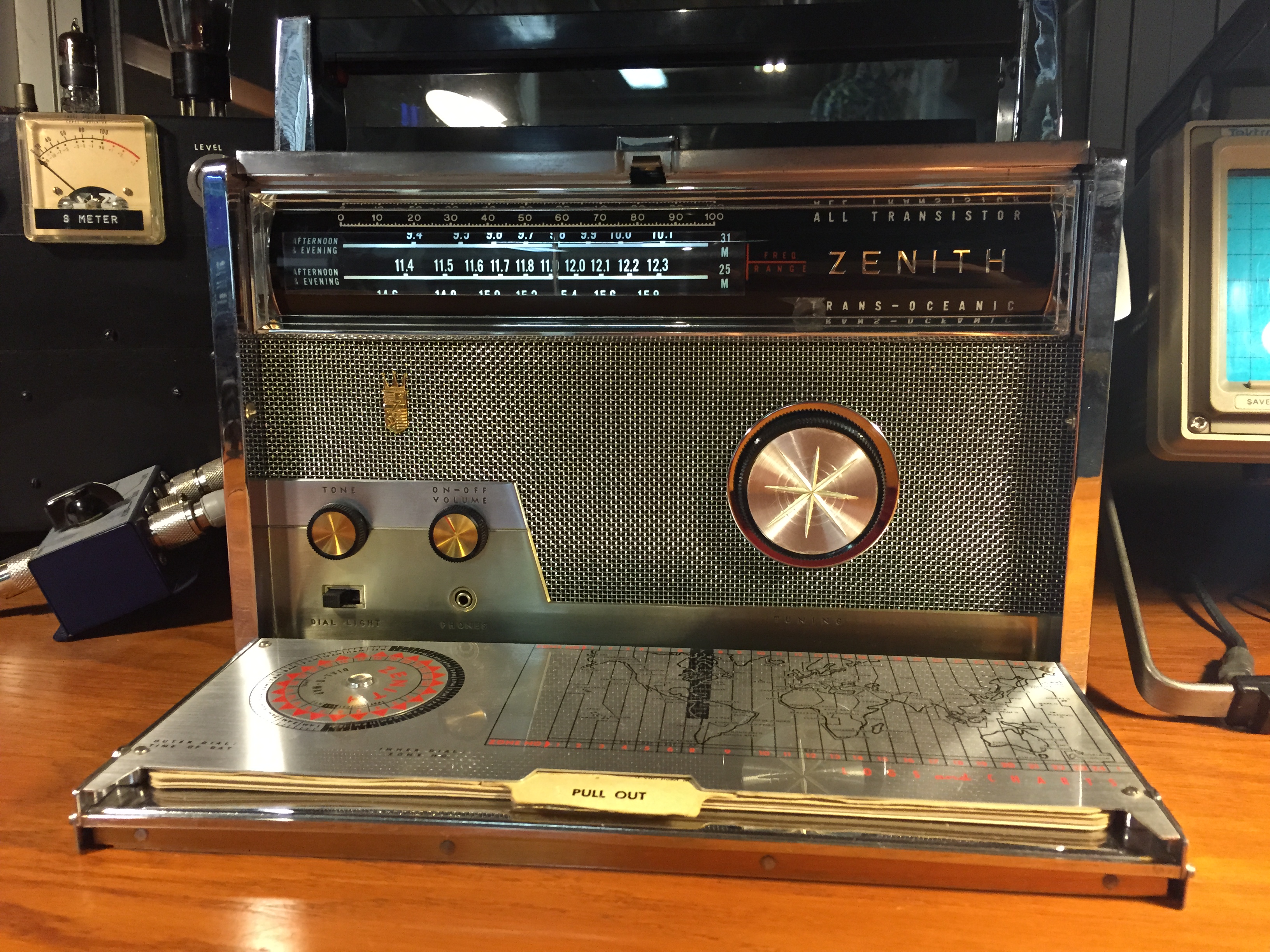
This image is after replacing the standard incandescent E10 miniture screw bulb with a white LED E10 bulb. Then I removed the spring return on the Dial Light switch, since the D cell battery will allow the light to work for hours of use.
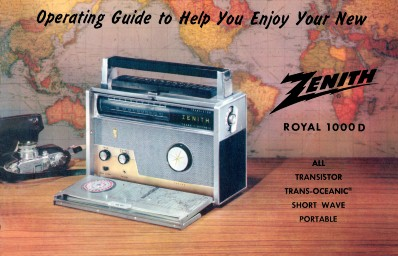
Movie Appearances:
The Roman Spring of Mrs. Stone (1961): The 1000D sits behind the Sofa in Mrs. Stones apartment throughout the entire movie.
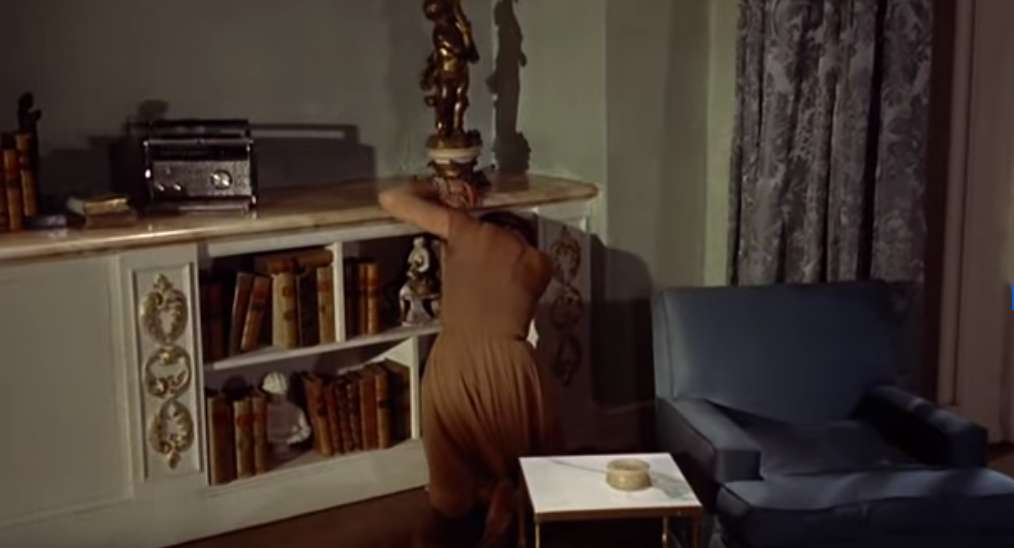
The Worlds Fasted Indian (2005). Side view of a Royal 1000 sits on a table under a canopy outside the trailer just behind the shoulder of Jake (Native American, Saginaw Grant)
From the Earth to the Moon (1998):
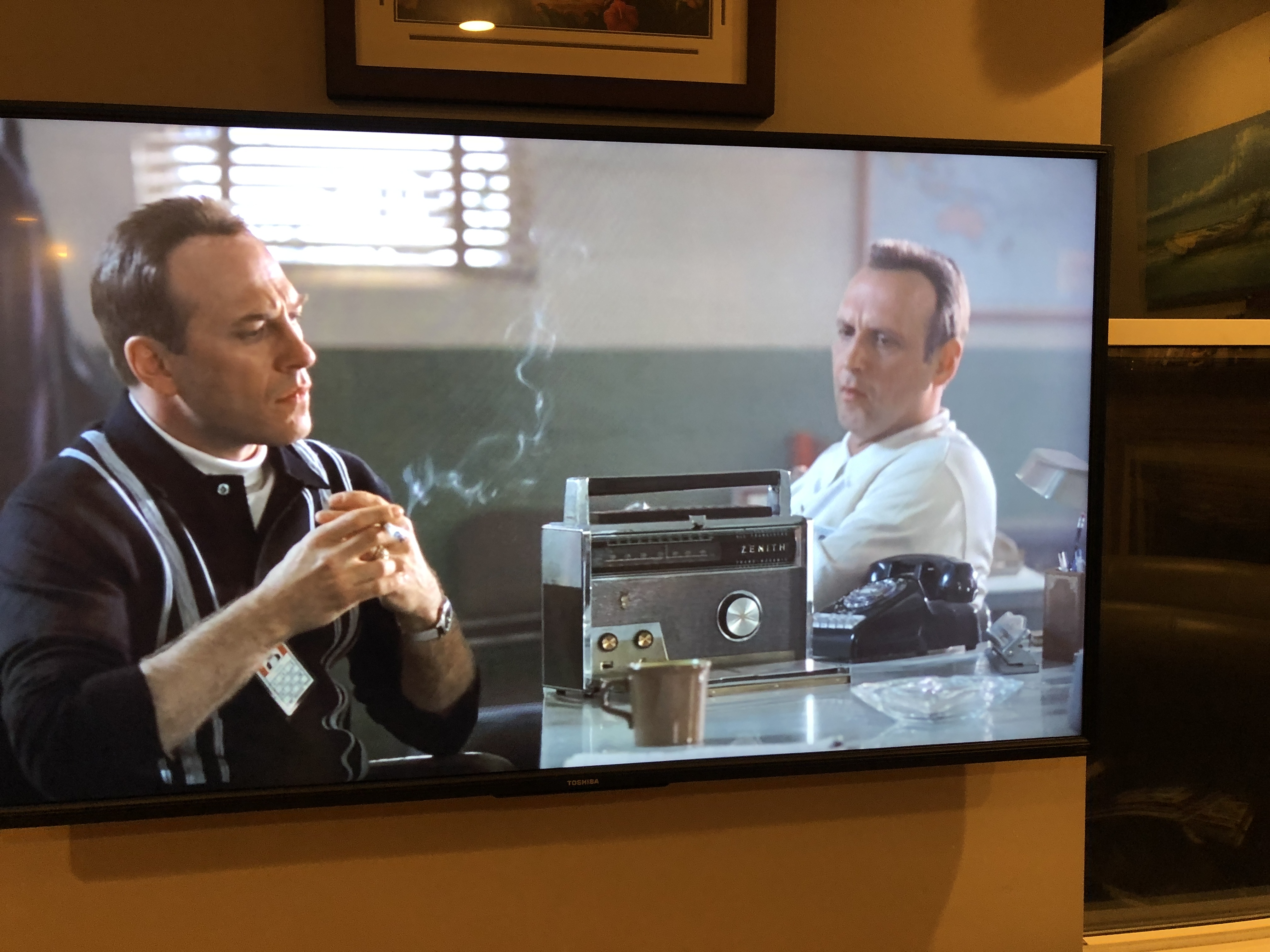
Volunteers (1985) (Tom Hanks). (Takes place in 1962)

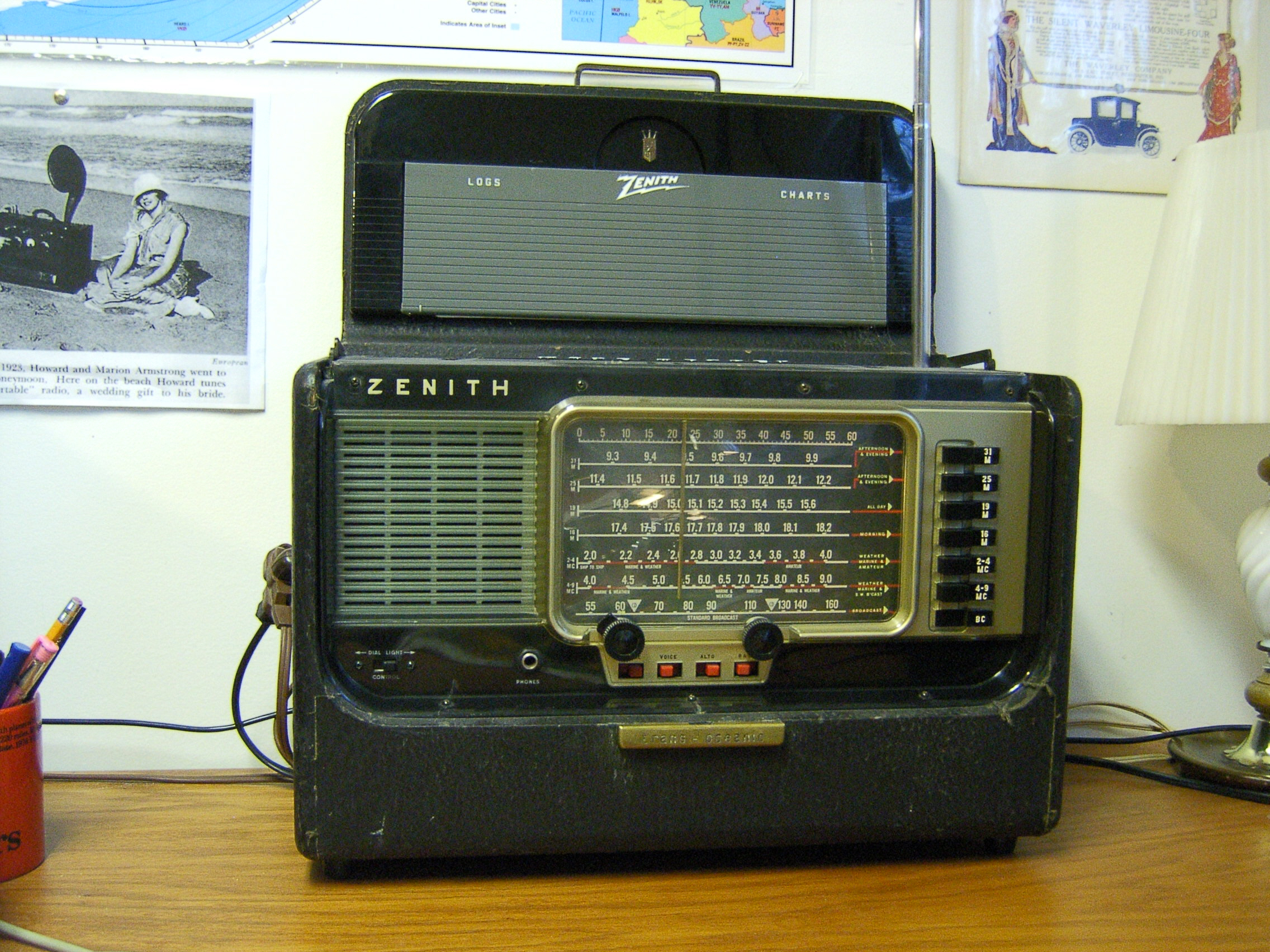 Classic 1958 A600.
7 Band MW,SW Receiver. Coverage is almost continuous from 550khz to 18mhz. The MW antenna is a "Wavemagnet" mounted on top of the Radio. An external "Wavemagnet" was provided to improve reception. SW antenna is a telescopic whip concealed inside the case. The case is wood with a cloth covering. Most of the size of the radio is due to the high voltage battery required to operate a tube radio (the space below the knobs is just for the Battery). A clever retractable 110vac line cord on the side allows for either mains or battery operation. Made in U.S.A (Chicago, IL)
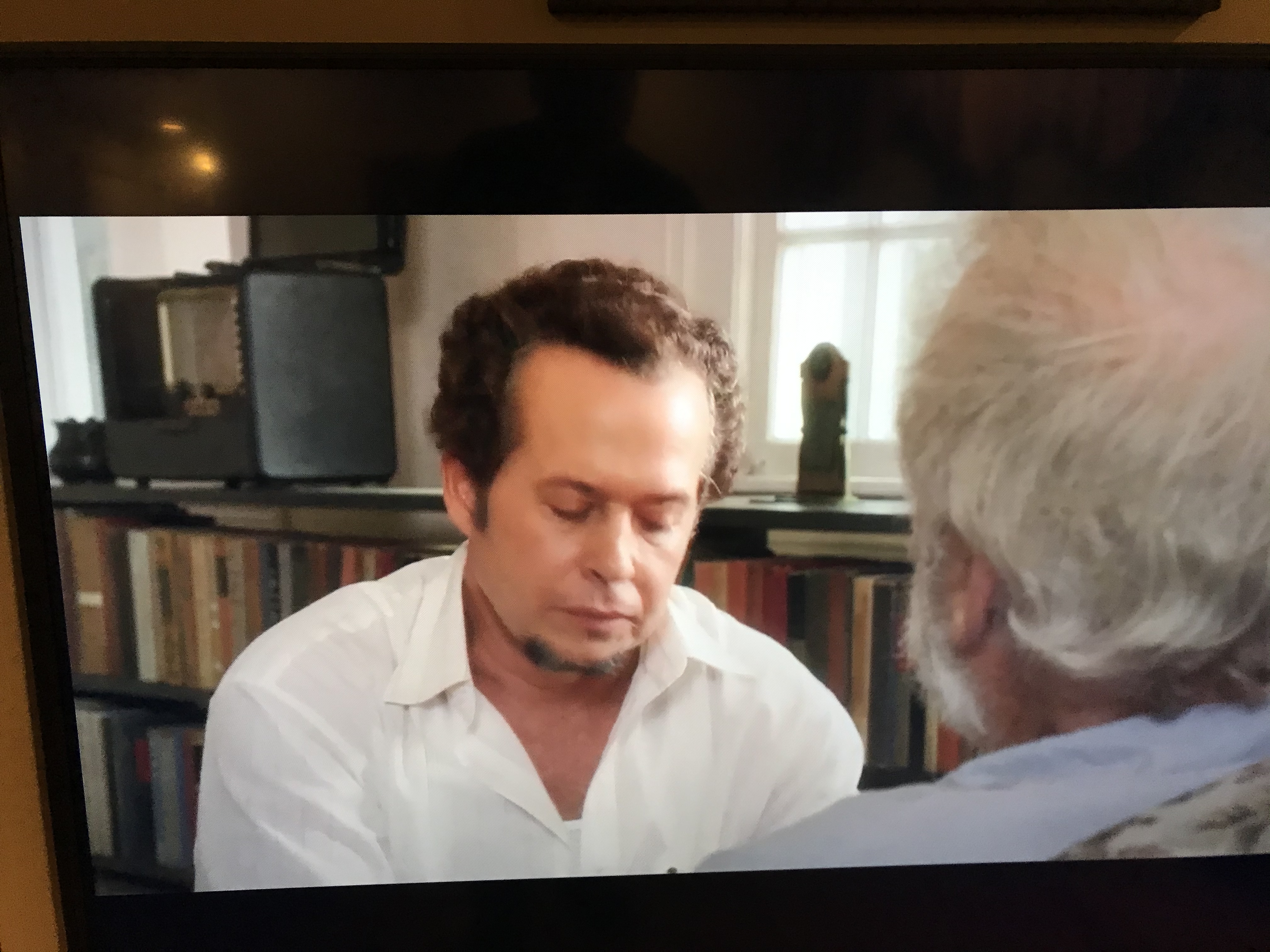
TransOceanics (Slide Rule Dial) in movies:
Kiss Me Deadly (1955): The A600 sits on the nightstand in the penultimate scene in the movie.
Papa Hemingway in Cuba (2015). A600 sits on the long shelf/table along a long row of windows in Hemingways house in Cuba.
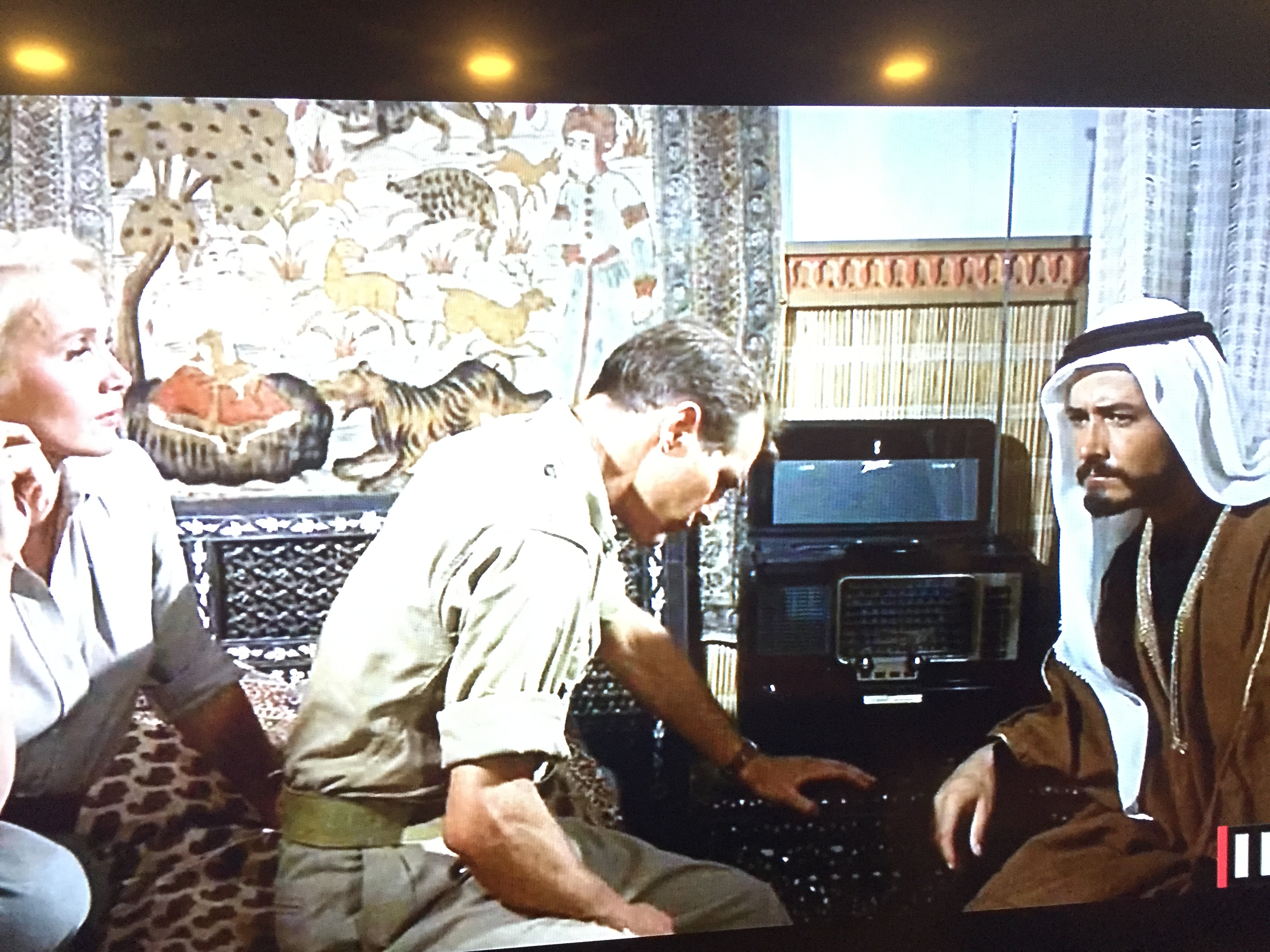
Exodus (1960) pictured. Listening for news of the United Nations vote:
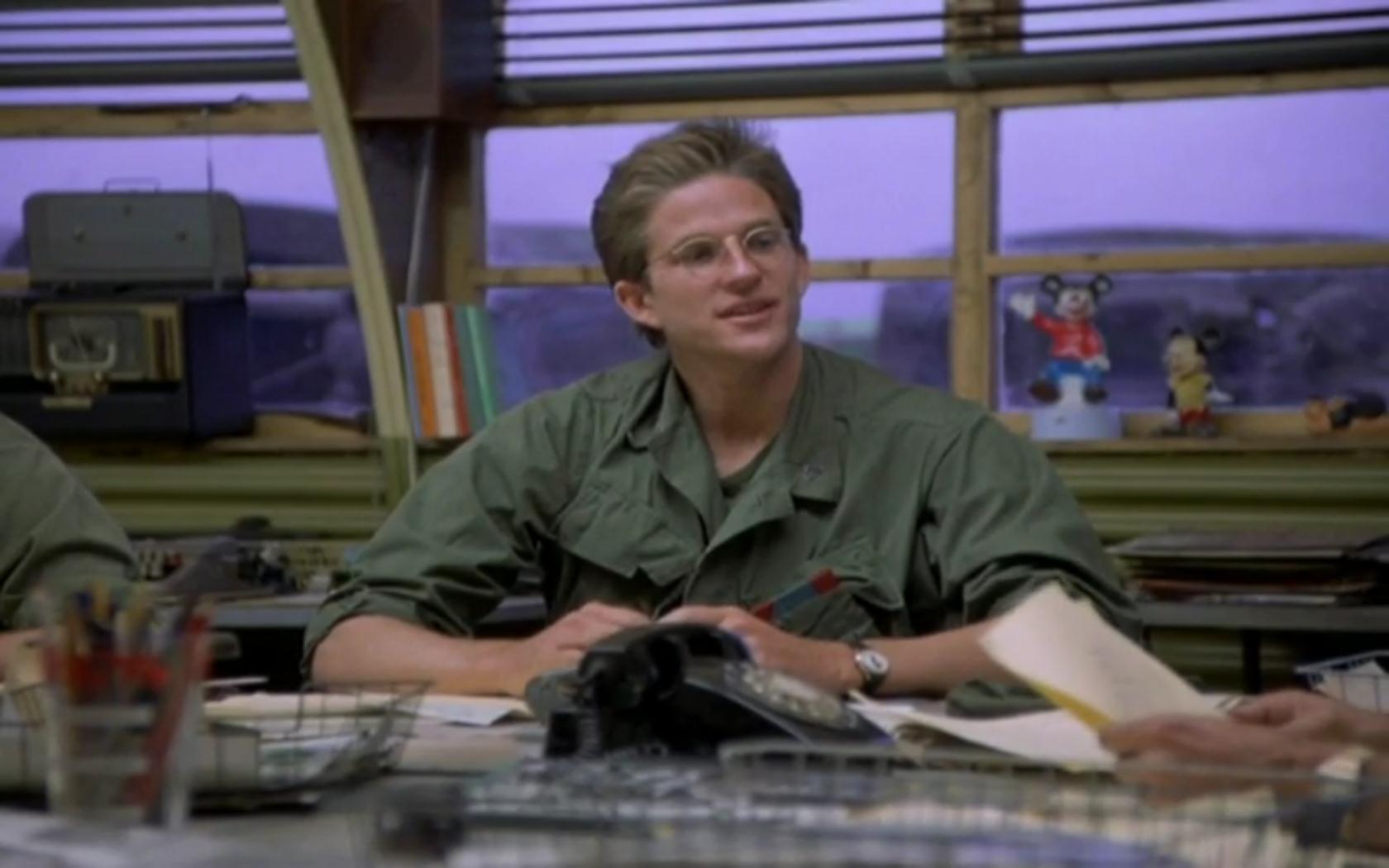
TransOceanics (Round dial) in movies:
Full Metal Jacket:
Thunder Road:
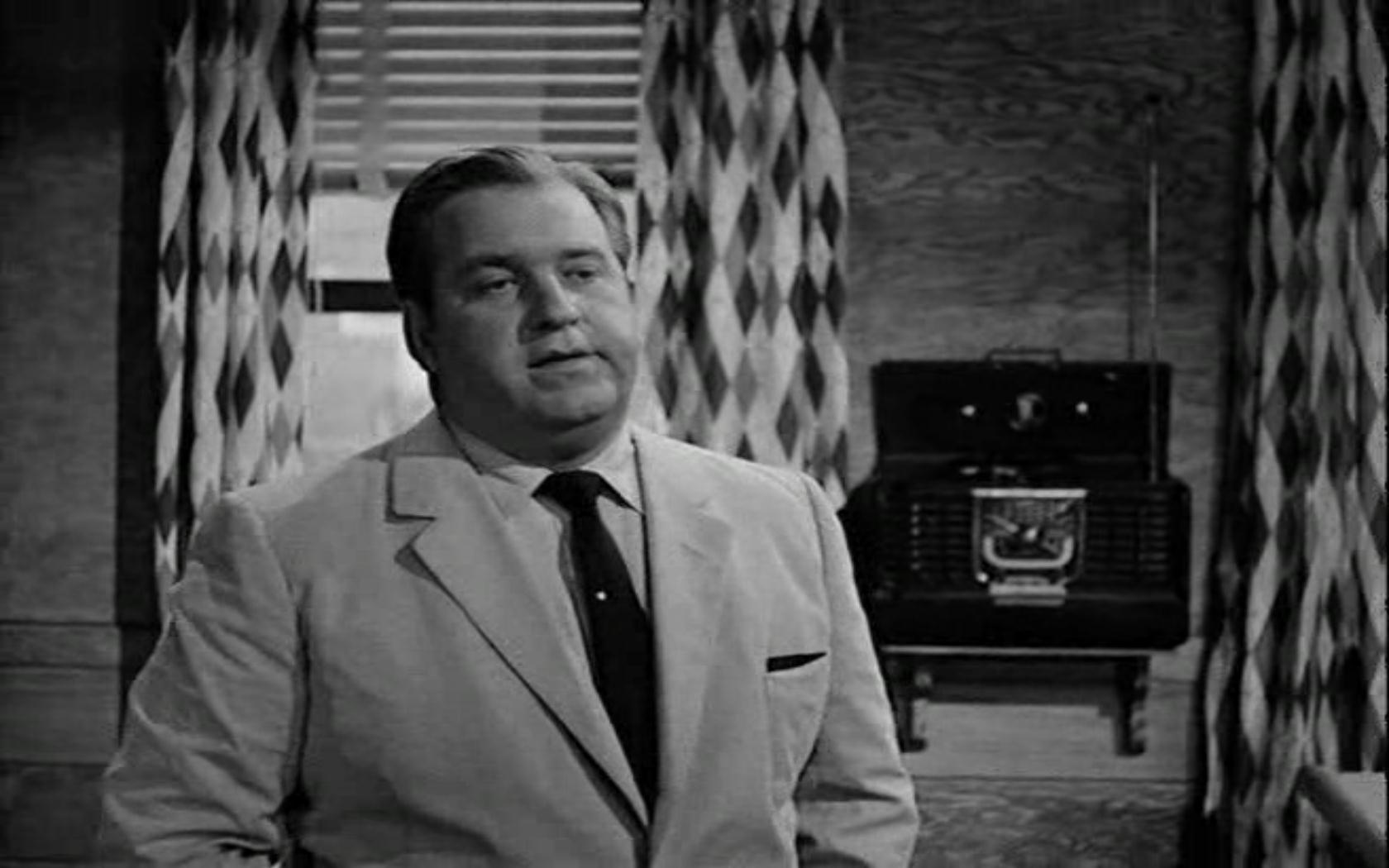
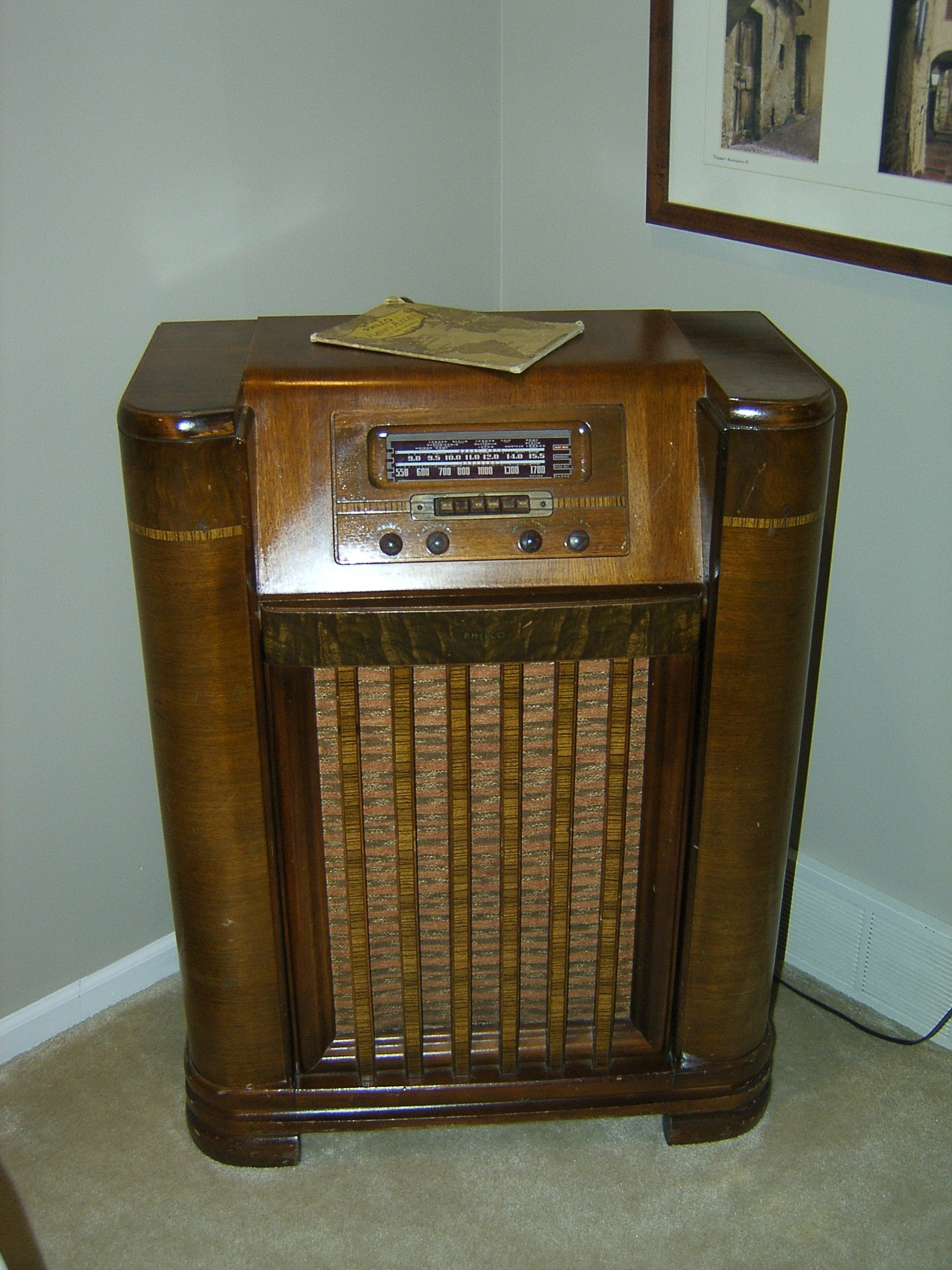 Philco Console
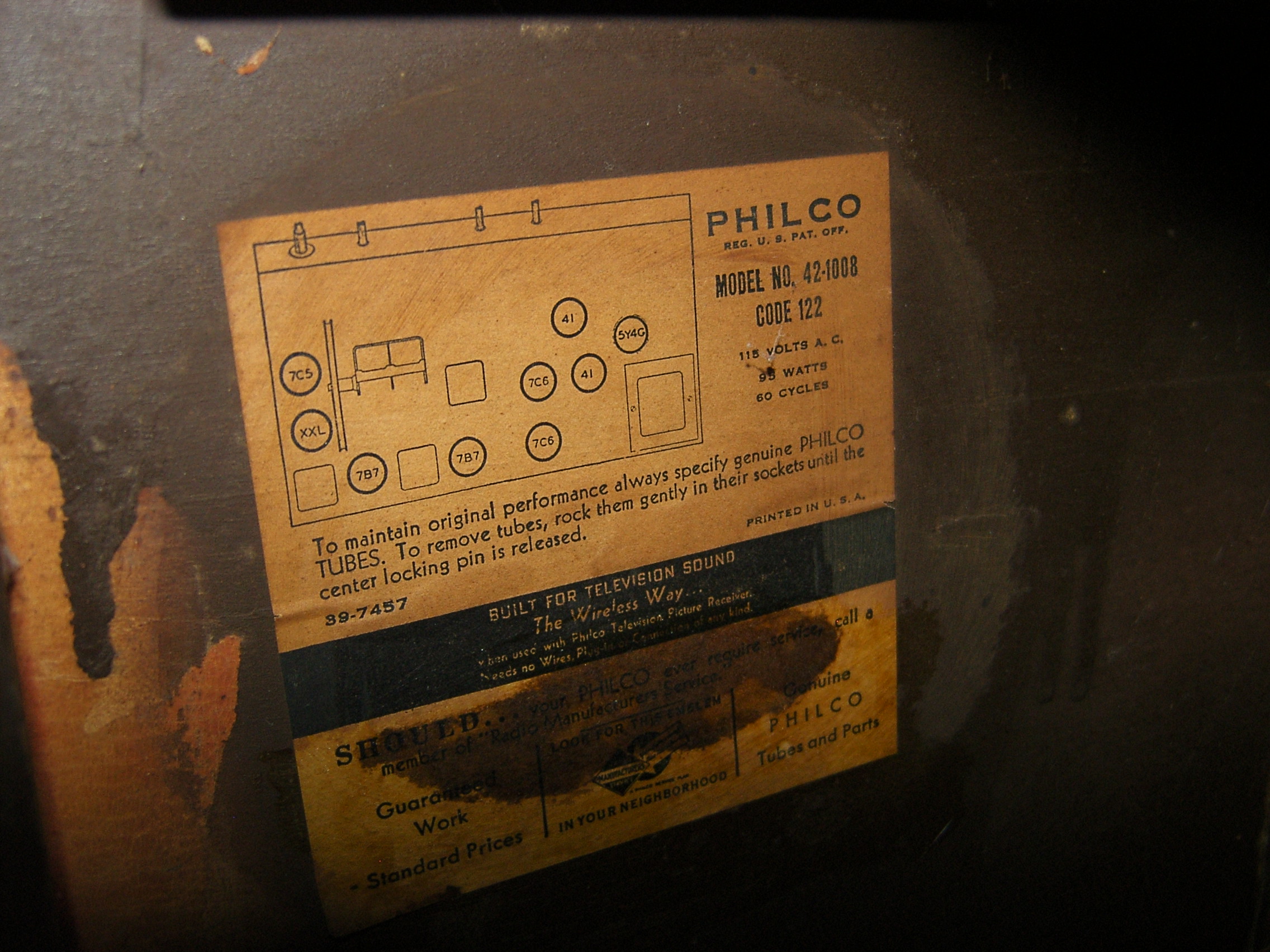
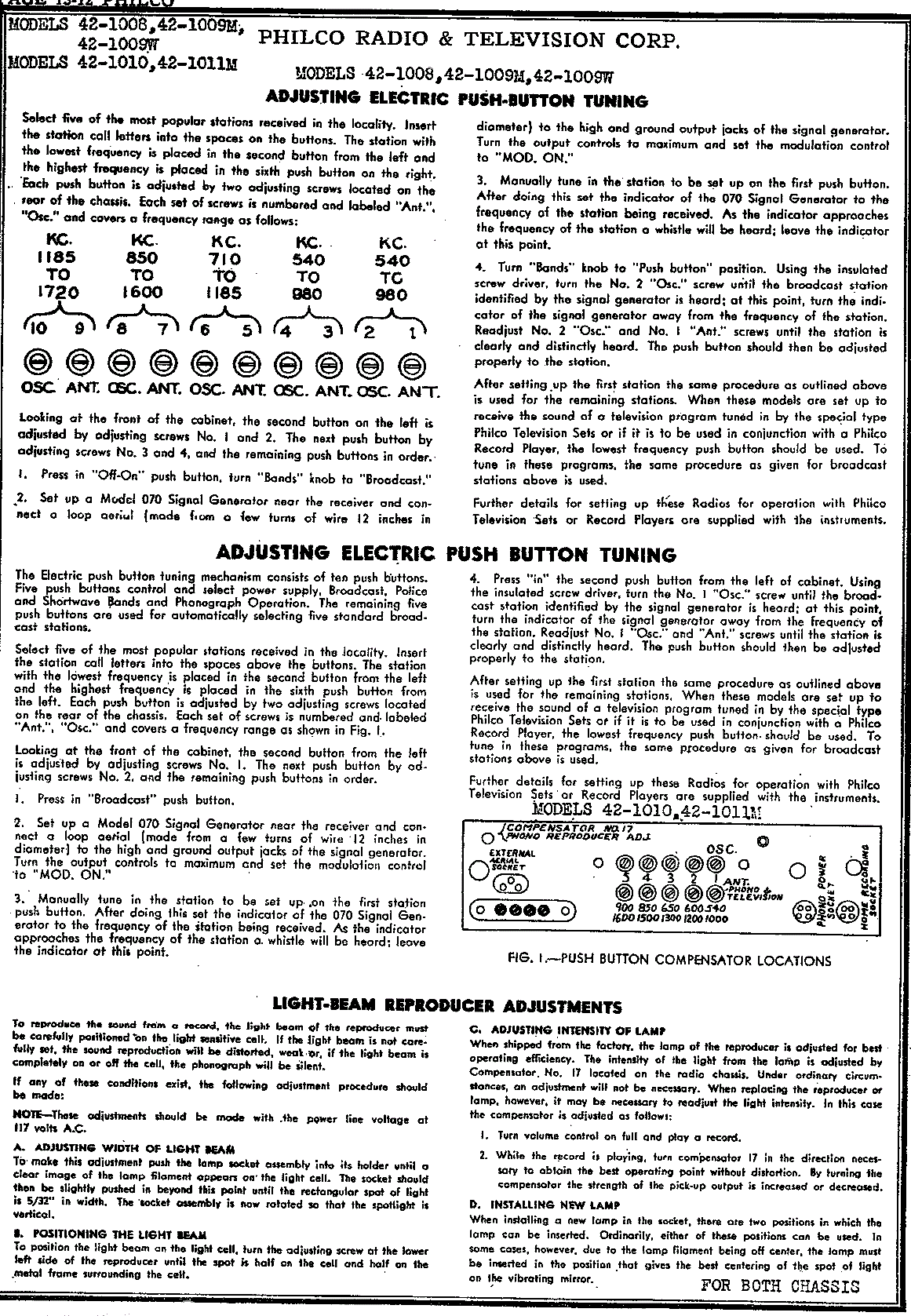
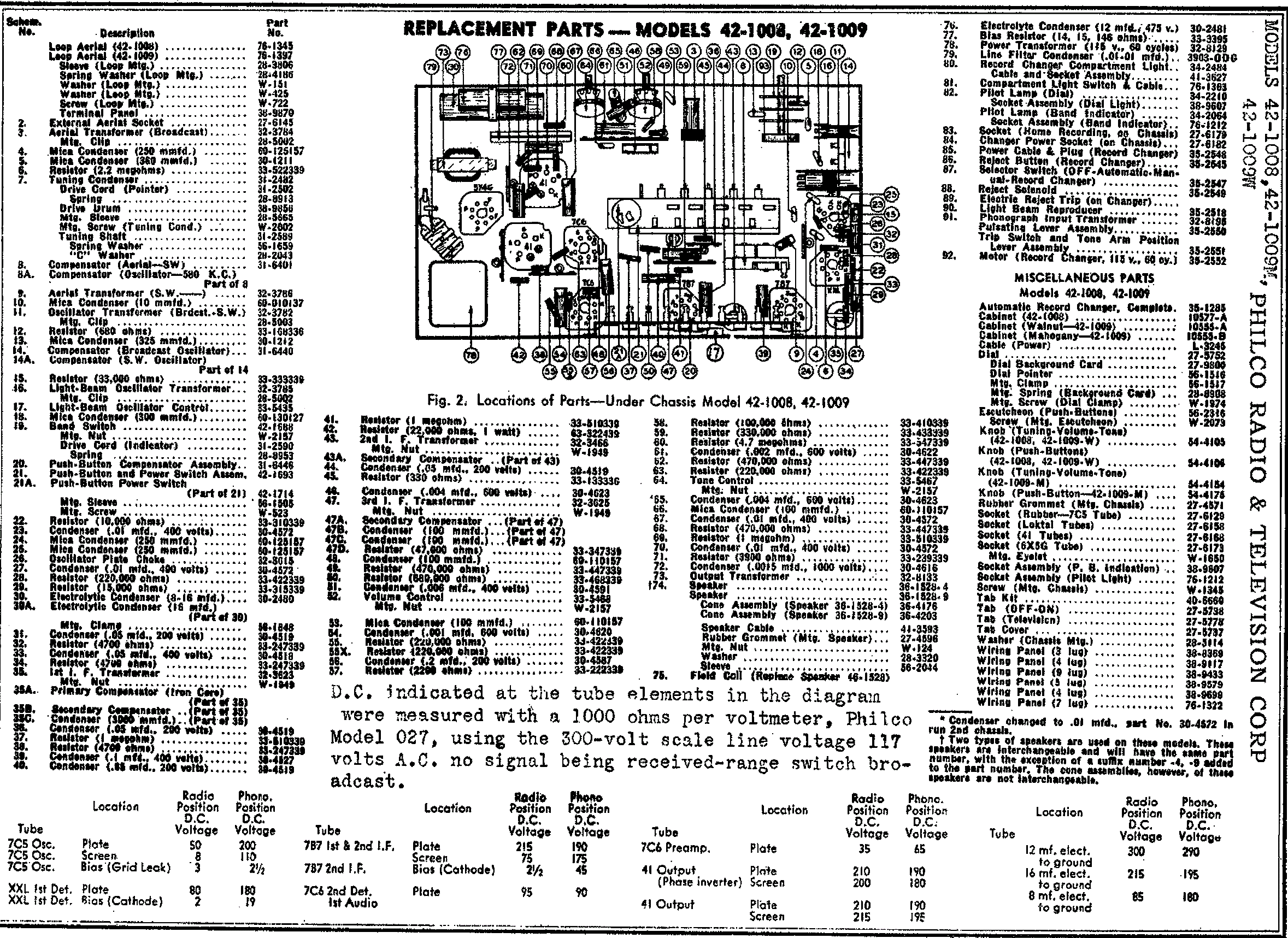
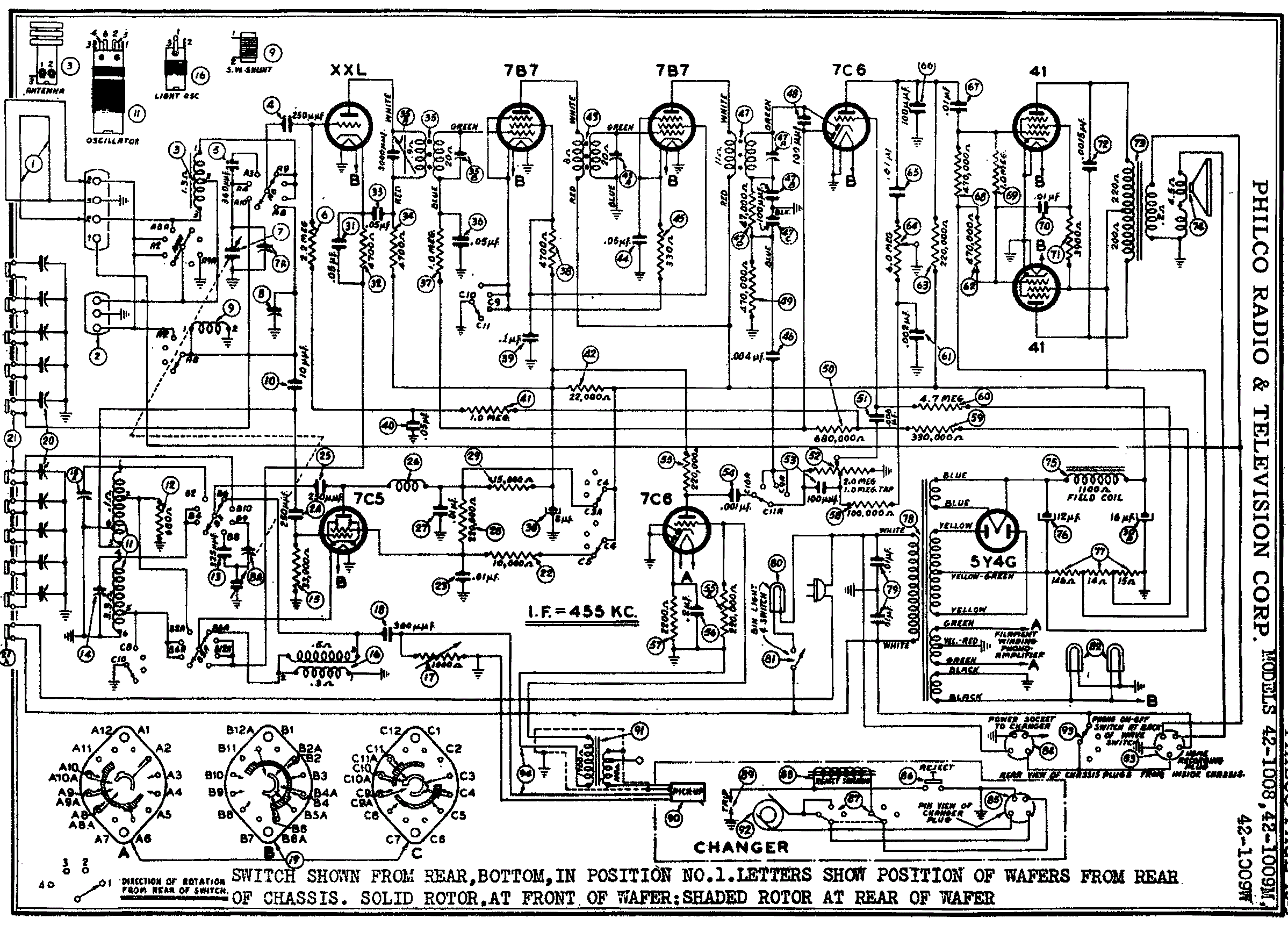
 Classic 1942 Radio/phonegraph Model 42-1008
2 Band MW,SW Receiver. MW band has extended range to cover into the Police band (of the day) and goes upto the 160m band. The SW band covers just below 9mhz to just above 15mhz. Both bands use a large built in loop antenna on the inside of the cabinet and can be rotated +/- 45deg. Unit has a combination of standard and loctal style tubes.
Behind the front grill is a phonograph that uses a needle that transmits the audio back to the amplifier via a light beam.
Made in U.S.A (Chicago, IL)


WIND AM 560: Sunday 12am-2am
WGN AM 720: Sunday 11pm-2am
WBBM AM 780: Weeknights 12am-1am
KXEL AM 1540: Saturday 9pm-5am (Classic Radio Theater)
Find AM radio stations play RadioSpirits show